Giving truck drivers complete confidence in every stop and start
COMponents
four main components of a truck’s brake system
Explore the four key components that make up a truck’s brake system—engineered to ensure safe, reliable, and powerful stopping performance on every road.
For heavy-duty commercial transport, braking reliability is paramount, it directly impacts driver safety, cargo integrity, and overall operational efficiency. The industry has witnessed a significant and necessary migration from older drum brake assemblies to modern air disc brake calipers. This transition marks a new standard for truck stopping power. Air disc systems address the limitations of their predecessors by offering superior thermal management and consistent, fade-resistant performance, fundamentally reducing maintenance demands and minimizing vehicle downtime. This article explores how the air disc caliper functions as the core of modern commercial air brakes and highlights the quality requirements for associated components like the brake chamber and slack adjusters, all of which contribute to maximizing road safety.
Core of the Commercial Vehicle Brake System
The air disc brake calipers are the functional heart of the modern heavy duty vehicle’s stopping apparatus. They translate the driver’s input and the stored energy of the pneumatic system into mechanical friction, effectively stopping thousands of pounds of vehicle and cargo.
The Power of Air Brakes: The overall system begins with compressed air, which is the foundational energy source for the heavy duty vehicle’s braking. When the driver presses the brake pedal, air pressure is released from the reservoirs into the brake chamber. The brake chamber acts as a crucial mechanical interface. It converts the air pressure into linear force. This force pushes a rod that, in turn, actuates the brake calipers. The efficiency and reliability of this conversion process depend heavily on high quality manufacturing standards, particularly for the sensitive diaphragms and seals within the brake chamber.
Calipers as the Actuator: The brake calipers themselves are complex assemblies. They house the pistons and the friction material (the brake shoes or pads) and guide their movement against the rotor. The fundamental advantage of disc systems over drum systems is their superior heat dissipation, which prevents brake fade during repeated or prolonged braking events, such as descending steep grades. Reliable truck brake calipers manufacturers focus on material strength and precision machining to ensure the caliper body can withstand immense pressure and thermal stress without warping or failing. Modern heavy duty brake calipers are designed to provide even pressure distribution across the pad surface, maximizing friction efficiency and extending the life of the brake shoes and rotor.
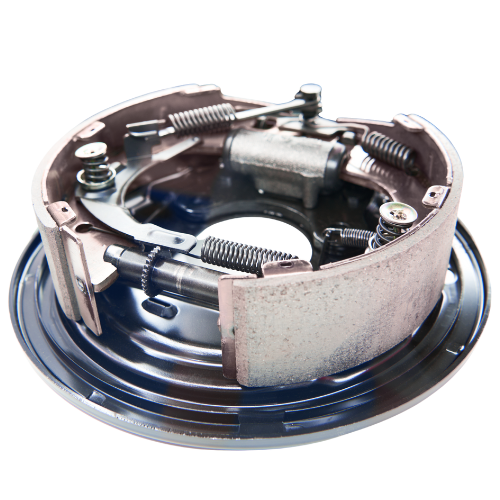
Distinction from Traditional Brake Shoes: Traditional brake shoes operate by pressing friction material outward against a spinning drum. This process generates substantial heat that is easily trapped, leading to brake fade and reduced stopping power. Air disc calipers, however, press friction pads inward against a spinning rotor (disc). The rotor is exposed to airflow, allowing heat to dissipate rapidly. This consistent performance, especially in high temperature or frequent stop and start conditions common in urban logistics, makes disc brakes a superior choice for fleet safety.
Unique Traits and Engineering of Air Disc Caliper Designs
While all air disc brake calipers perform the same ultimate function, such as applying friction to the rotor, their internal engineering designs differ significantly, impacting maintenance, weight, and thermal performance. truck brake calipers manufacturers offer different configurations to suit various operational demands.
Sliding Pin (Floating) Calipers: This is one of the most common designs in the commercial vehicle market. In a sliding caliper, only one side of the caliper housing contains the hydraulic or air powered piston assembly. When the piston applies force, it pushes the inner brake shoes (pad) against the rotor. Simultaneously, the caliper body itself slides along guide pins, pulling the outer brake shoes (pad) against the rotor. This design is often lighter and simpler to manufacture, but it requires regular inspection of the sliding pins to ensure they remain lubricated and free of corrosion, which could otherwise compromise braking performance and lead to uneven brake shoe wear.
Fixed Calipers: Fixed calipers do not move; they are rigidly bolted to the axle assembly. They utilize two or more piston assemblies (one on each side of the rotor) to apply pressure simultaneously. This design offers the most consistent and even application of force, reducing the likelihood of vibration or uneven wear. However, fixed calipers are often heavier and more complex to service due to the multiple piston seals and pressure lines involved. Their rigidity makes them a preferred choice for specialized heavy duty brake calipers applications where absolute consistency under extreme load is paramount.
The Role of the Slack Adjuster: In traditional drum brakes, the slack adjuster automatically maintains the correct clearance between the brake shoes and the drum. In air disc systems, the need for a separate slack adjuster is often integrated directly into the caliper mechanism itself. The integrated adjustment mechanism ensures that as the brake shoes wear down, the piston position is automatically adjusted to maintain the minimal, necessary clearance with the rotor. This advanced functionality means a semi truck slack adjuster or a traditional slack adjuster of trucks is usually not a separate component but rather part of the caliper assembly, offering more precise and reliable adjustment throughout the life of the brake calipers. This integrated design is a key differentiator between the two braking technologies.
Maintenance Imperatives and Hazard Avoidance
The complexity and critical safety role of air disc brake calipers mean that proactive maintenance is non negotiable. Ignoring small issues can rapidly escalate into critical safety hazards, especially considering the high speeds and loads involved in logistics.
Heat Stress and Rotor Warping: Air disc systems manage heat better than drum brakes, but they are not immune to thermal damage. Excessive heat, often caused by continuous downhill braking without proper engine retardation, can warp the rotor, causing pulsing or juddering. To avoid this, drivers must be trained to utilize engine brakes or retarders effectively (especially on gradients), and fleet maintenance schedules should include thermal imaging checks of rotors to identify potential hot spots before physical warping occurs.
Moisture and Corrosion in the Chamber: While the caliper itself is robust, the actuation components can be vulnerable. The brake chamber and its internal mechanisms rely on clean, dry air. Contaminants such as moisture, oil, or rust can compromise the diaphragm’s integrity, leading to sluggish response times or premature failure. Avoiding this requires regular servicing of the air dryer and periodically draining the air tanks and inspecting the brake chamber for external damage or leaks, ensuring the entire air brake system operates efficiently.
Preventing Pad Contamination and Wear: The brake shoes (pads) must be free of oil, grease, and contamination. Contaminated pads lead to significantly reduced friction, increased stopping distances, and rapid, uneven wear of the pads and rotor. Ignoring grinding noise means the pads have reached their minimum thickness, quickly destroying the rotor. To prevent this, use only high quality brake shoes that match the caliper specifications. During replacement, ensure all components (pins, shims) are clean, never use unapproved lubricants, and conduct regular visual inspection of pad thickness alongside checking the slack adjuster mechanism for proper clearance.
The Importance of Quality Parts: Using non specification parts is a primary cause of brake failure. Inferior piston seals or non genuine brake calipers compromises the vehicle’s safety envelope. The cost savings of cheap parts are negligible when weighed against the risk of a safety failure. This underscores the critical need for components sourced from manufacturers dedicated to uncompromising quality standards.
GAPASA: For Component Quality and System Reliability
The shift to advanced air disc technology requires equally high quality components for maximum safety and uptime. As an IATF 16949 certified global supplier, GAPASA specializes in precision engineered truck and trailer brake parts, ensuring the reliability essential for modern commercial fleets. We ensure the reliability of every part that links the driver’s input to the final stop.
Our core commitment is to the safety and operational efficiency of heavy duty vehicles, which we achieve through a focused product line essential for the reliability of the air brake system:
Brake Chambers: These critical devices convert compressed air energy into mechanical force required to actuate the brakes. GAPASA offers robust and durable designs to withstand high pressure and environmental stress, protecting the delicate air system.
Slack Adjusters: Precision engineered components that automatically maintain the necessary clearance between brake shoes and the drum, ensuring optimal braking force and consistency for legacy drum systems or integrated into modern air disc designs.
S Camshafts: The rotating component that presses the brake shoes against the drum lining in a drum brake system, characterized by high material strength and precision machining for reliable operation.
With over two decades of industry experience, GAPASA controls every stage of production (from raw material sourcing to final assembly) ensuring every part meets stringent global safety and performance requirements. We provide reliable, cost effective solutions to fleets, distributors, and OEMs across international markets, prioritizing long term partnerships built on quality and service.
Conclusion
The air disc caliper is a vital advancement, offering significant safety and operational superiority over traditional drum systems, primarily through effective heat management. This sophisticated technology requires a proactive, stringent maintenance focus on air quality, thermal management of the rotor, and the exclusive use of high quality components. By integrating premium parts and diligent maintenance, fleets ensure their entire air brake system functions flawlessly, protecting both their investment and public safety.
Looking for brake chambers, slack adjusters or other commercial vehicle brake parts? Send us your product numbers, quantities or technical requirements for review.