Giving truck drivers complete confidence in every stop and start
COMponents
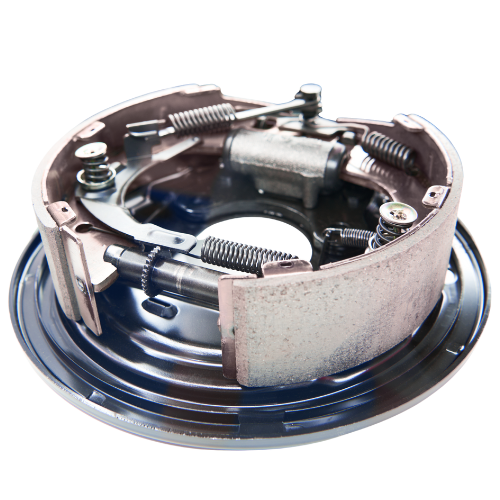
four main components of a truck’s brake system
Explore the four key components that make up a truck’s brake system—engineered to ensure safe, reliable, and powerful stopping performance on every road.
Consistent and reliable braking performance is a non negotiable requirement for commercial vehicle logistics. While components like brake chambers provide the power, the slack adjuster is the precise mechanism that regulates the critical clearance between the brake shoes and the drum. As friction material wears down over time, this mechanism ensures the brakes engage immediately and effectively. The shift from manual slack adjusters to modern automatic systems represents a significant safety advancement, eliminating the need for frequent manual adjustments and ensuring the vehicle's stopping capability remains optimized, regardless of road conditions or load weight. This sophisticated mechanism is foundational to maintaining the overall integrity of the air brake system.
Defining and Differentiating the Slack Adjuster
The primary function of the slack adjuster is to compensate for the normal wear of the brake shoes (or pads, in disc systems) and the friction surfaces of the drum, maintaining a predetermined gap to ensure swift brake application.
Purpose of the 'Slack': A small amount of clearance is necessary when the brakes are disengaged to allow the wheel to turn freely without drag. However, as the brake shoes wear down, this clearance naturally increases. This excessive clearance forces the brake chamber pushrod to extend farther before the shoe contacts the drum. If the slack becomes too large, the pushrod reaches the end of its legal stroke limit before it can apply adequate force to the brakes, severely diminishing stopping power or causing a complete brake failure. The slack adjuster controls this gap precisely, maintaining optimal leverage and consistent timing for brake application.
Evolution to Automatic Slack Adjusters: Legacy braking systems utilized manual slack adjusters, which required technicians to routinely check brake stroke and manually turn an adjustment screw to compensate for wear. This process was time consuming and often neglected or incorrectly performed, leading to unsafe operating conditions. Modern automatic slack adjusters are designed to be self monitoring. They measure the pushrod stroke distance during a brake application and automatically perform the necessary adjustment on the release stroke, ensuring the correct running clearance is maintained constantly without requiring manual intervention. This technological change drastically improves safety and reduces maintenance labor.
Integration with Air Disc Systems: While the slack adjuster mechanism is most familiar in drum brake assemblies, the fundamental principle of maintaining consistent running clearance is equally vital in air disc systems. In these advanced setups, the adjustment mechanism is not an external component but is typically integrated directly within the caliper housing. This internal adjuster serves the same function, continuously adjusting the piston position to keep the brake pads correctly positioned near the rotor, guaranteeing minimal response delay and uniform wear characteristics.
Operational Mechanics and Common Failures
The automatic slack adjuster is a highly engineered, mechanical device that works in concert with the brake chamber to monitor and maintain the correct pushrod travel.
How the ASA Operates: When the air brakes are engaged, compressed air drives the brake chamber diaphragm, causing the pushrod to move outward and rotate the slack adjuster and S Camshaft. The ASA mechanism is designed to only engage its adjustment clutch if the measured stroke exceeds a predefined distance, typically around two inches. If this threshold is crossed, indicating excessive shoe wear, the internal gears ratchet when the pushrod retracts upon brake release. This ratcheting action incrementally shortens the effective length of the slack adjuster until the ideal running clearance is restored.
Common Failure: Over-Adjustment: Over adjustment is a dangerous failure where the ASA maintains the brake shoes too close to the drum. This prevents the brakes from fully releasing, causing them to drag continuously. This condition generates extreme, localized heat, leading to rapid and uneven wear of the brake linings, potential scoring or cracking of the drum, and a significant reduction in fuel efficiency. The root cause is often internal malfunction within the ASA mechanism, such as worn springs, sticking pawls, or contamination preventing smooth operation.
Common Failure: Under-Adjustment: Under adjustment, characterized by excessive brake slack, is the most critical failure mode as it directly impairs stopping capability. When the ASA fails to engage or ratchet, the pushrod travels too far, leading to poor brake timing and force. Failure is commonly triggered by corrosion, the seizure of internal components, improper initial setup (clocking), or the use of incorrect pushrod length. In this state, the driver must often apply the brakes multiple times (pump the pedal) to build enough force to stop the vehicle, creating an extremely unsafe driving condition.
Maintenance and Safety Requirements
Given the slack adjuster’s role in safety, proactive maintenance and adherence to strict operational guidelines are critical for fleet managers. Ignoring ASA performance can lead directly to catastrophic brake failure.
Preventing Misadjustment Issues: It is crucial for technicians to understand that manually adjusting an automatic slack adjuster is a temporary fix that masks a deeper mechanical failure. If a vehicle exhibits excessive slack, it signals a primary problem like a faulty ASA mechanism, seized brake pin bushings, or an incorrect match between the brake chamber and pushrod length. The maintenance focus must be on diagnostic repair, replacing or repairing the underlying failed components, and then resetting or replacing the ASA, rather than simply turning the adjustment bolt.
Controlling Contamination and Corrosion: Operating constantly under the vehicle chassis, the slack adjuster is highly vulnerable to environmental factors. Exposure to water, road salt, dirt, and mud can accelerate corrosion, causing the precise internal ratcheting components to bind or seize. To maintain their designed operational efficiency, ASAs require periodic, dedicated inspection, cleaning, and lubrication utilizing specialized lubricants recommended by the manufacturer. Particular attention must be paid to the linkage arms and mounting clevis pins.
Ensuring Correct Installation: Proper installation is essential for the ASA to function correctly throughout its lifespan. This includes ensuring the slack adjuster is correctly "clocked" or aligned relative to the brake chamber and S Camshaft, as misalignment will prevent the mechanism from correctly measuring stroke or engaging the ratchet. Only high quality, OE specification replacement parts should be utilized, and the slack adjuster model must be precisely matched to the specific vehicle's brake chamber size and pushrod length to ensure the intended leverage ratio and adjustment logic are preserved.
GAPASA: Commitment to Commercial Vehicle Component Quality
The effective operation of air brake systems relies entirely on the precision and durability of every component. As an IATF 16949 certified global supplier, GAPASA specializes in precision engineered truck and trailer brake parts, ensuring the maximum reliability essential for modern commercial fleets. We focus on delivering parts that meet or exceed OE specifications to support uncompromising safety standards.
Our core commitment is to the safety and operational efficiency of heavy duty vehicles, which we achieve through a focused product line essential for the reliability of the air brake system:
Brake Chambers: These critical devices convert compressed air energy into mechanical force required to actuate the brakes. GAPASA offers robust and durable designs to withstand high pressure and environmental stress, protecting the delicate air system.
Brake Shoe Kits & Linings: These components provide the friction surface necessary for stopping the vehicle. GAPASA ensures high material durability and precise manufacturing for reliable, extended wear life.
S-Camshafts: The rotating component that presses the brake shoes against the drum lining in a drum brake system, characterized by high material strength and precision machining for reliable operation.
With over two decades of industry experience, GAPASA controls every stage of production, from raw material sourcing to final assembly, ensuring every part meets stringent global safety and performance requirements. We provide reliable, cost effective solutions to fleets, distributors, and OEMs across international markets, prioritizing long term partnerships built on quality and service.
Conclusion
The automatic slack adjuster is a key safety component, managing brake clearance to ensure instant and powerful stopping capability. Its precision operation allows fleets to maximize efficiency while reducing the risk of accident due to brake lag or failure. By committing to routine inspections, identifying and correcting the root causes of misadjustment, and utilizing high quality, certified replacement parts, commercial vehicle operators can ensure their entire air brake system functions flawlessly, protecting both their investment and public safety.
Looking for brake chambers, slack adjusters or other commercial vehicle brake parts? Send us your product numbers, quantities or technical requirements for review.