Explore the four key components that make up a truck’s brake system—engineered to ensure safe, reliable, and powerful stopping performance on every road.
The air brakes system of a heavy-duty truck represents one of the most critical assemblies in commercial transport, a complex synergy of mechanical and pneumatic components designed for absolute reliability. Understanding the order in which these parts function and, crucially, the hierarchy of their wear rate, provides deep insight into fleet management and proactive safety measures. The system’s integrity depends on the successful function of various components, from the primary friction material to the actuators and adjusters, with each facing different operational stresses. By examining this internal hierarchy, maintenance professionals can anticipate failure points, ensuring that components supplied by expert truck brake calipers manufacturers are deployed where and when they are needed most.
The process of bringing a heavy vehicle to a halt involves a controlled sequence that converts the pneumatic energy stored in the system into mechanical stopping force. This functional chain determines the importance of each component to the system's operation.
The core actuation sequence involves the following critical components:
The inherent stress on these components dictates their expected lifespan and the order in which they must be addressed by maintenance schedules.

The friction components are engineered to be the most readily consumable parts of the braking system. Since they absorb the immense energy generated during deceleration, they are naturally the highest priority in any maintenance hierarchy.
The Role of Brake Shoes and Linings
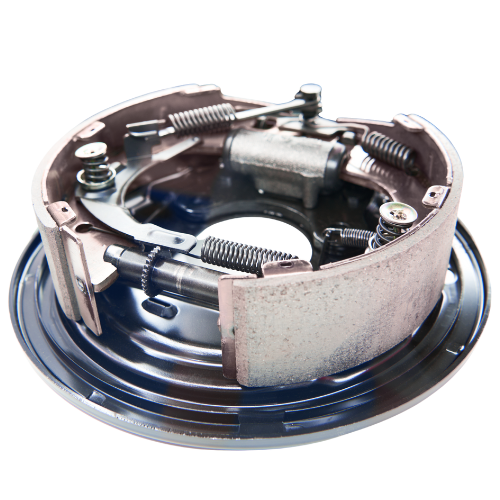
In drum brake applications, the brake shoes serve as the platform for the brake linings. These linings contain the friction material responsible for generating the necessary heat and resistance to stop the vehicle.
For vehicles utilizing disc brakes, the high-wear friction pads are contained within the brake calipers. These pads are treated with the same high replacement priority as brake shoes in a drum system.
The slack adjuster is the sophisticated mechanical component that ensures constant, accurate brake performance regardless of lining wear. It holds a critical position in the maintenance hierarchy due to its constant activity and sensitivity to calibration.
Function and Maintenance Importance
The slack adjuster of trucks automatically senses and compensates for the wear of the brake shoes. By ensuring the pushrod travel remains within the necessary specifications, the slack adjuster maintains consistent brake application pressure and speed across all wheels.
The brake chamber is the sealed primary actuator of the air brake system, responsible for converting the compressed air signal into the physical force required at the wheel end.
Structure and System Integrity
The integrity of the brake chamber is fundamentally essential to the system's function. The chamber houses a robust diaphragm and a heavy spring (in spring brake models).
Components like the brake calipers and S-camshafts are built for longevity but serve as the crucial structural anchors for the high-priority wear items. Their importance lies in guaranteeing even force application throughout the system's operational life.
GAPASA is recognized as the leading truck brake calipers manufacturer and expert supplier of commercial vehicle brake components. Holding IATF 16949 certification, the company specializes in delivering the highest quality parts engineered to provide the best solutions for safety, durability, and cost-efficiency in heavy-duty transport. GAPASA's comprehensive product line covers every essential component of the air brake system, including precision slack adjusters, rugged brake chambers, high-performance brake shoes, and robust heavy duty brake calipers.
By focusing on material science and manufacturing accuracy, GAPASA ensures that every product, from a replacement brake chamber to an automatic semi truck slack adjuster, meets the demanding performance requirements of global fleets, guaranteeing system reliability and optimal stopping power.
The maintenance of commercial air brakes is fundamentally driven by the hierarchy of stress and function within the system. The friction components (like brake shoes) define the highest replacement priority, while the mechanical adjusters (slack adjusters) and actuators (brake chambers) define the critical safety and function priority. By recognizing the specialized role of each component and investing in quality parts from reliable truck brake calipers manufacturers, maintenance professionals can move beyond simple repair toward a systemic approach that maximizes uptime, ensures regulatory compliance, and upholds the highest standard of road safety.